From day one of my first writing job in America, I got warned that the head of the department was wary of me because I was British. This wasn't a concern that I'd switch coffee for tea in the break room, or force my colleagues to wear tweed. He was worried that a fresh-off-the-boat Brit wouldn't be able to handle writing "American."
And I like to think I proved him wrong - but it wasn't easy. George Bernard Shaw once claimed that America and Britain were two nations "divided by a common language" and he's not wrong. British English and American English are remarkably dissimilar in a lot of ways.
As I explained here, I actually think American English is a lot more consistent and logical that archaic British English, but the differences go far deeper than just spelling. What exactly do I mean? Well, look at the example I've produced below. It perhaps illustrates the most significant difference between the way Americans and Brits communicate using the written word:
What differences do you notice between British English and American English?
Showing posts with label britain. Show all posts
Tuesday, August 16, 2011
Wednesday, April 20, 2011
Teenage Thugs "brick" a 4-year-old. Violent Britain four times more dangerous than America.
We Brits are snobby folk.Whenever there's a school shooting, or other gun-related tragedy in the United States, we like to shake our heads and mumble "only in America" - because those yanks are a terribly uncivilized lot, and such things are to be expected in their "wild west" gun culture.
But I'm starting to feel that Britain's earned her own reputation for a type of crime that happens "only in Britain."
It's the kind of callous, casual and totally unnecessary violent that seems pandemic on our streets.
The latest example is this one, from Grimsby:
A TEENAGER has been arrested after a four-year-old girl's face was shattered when she was hit by a BRICK. Full story here.Apparently a dad shouted at some kids who were kicking a football off the side of his van - which is pretty antisocial behavior to begin with. So outraged by this, the gang of teenagers then decided to teach this chap a lesson and lobbed a brick into the face of his four year old.
"The 4-year-old, who was strapped into a passenger seat, was knocked out, suffered a broken nose, lost two front teeth and was badly bruised."It is one of the most disgusting things I've ever read - but entirely typical for the UK. Stabbings, beatings and other thuggish behavior seem to be the norm these days - and the little shits responsible never seem to be held accountable for their actions (and nor do their parents.)
I
posted this one Facebook yesterday and got some fairly typical responses - with people pointing out that you don't read about gun crimes or murders with as much frequency as you do in the states. But was that a fair comparison?Apparently not - because when you factor in aggravated assault, rape, stabbings, beatings and all other crime classified as "violent" - including murder and gun crime - dear old Britain winds up with a ranking four times worse than the United States.
Yes, you're four times more likely to be the victim of violent crime in 'safe' Britain than you are in 'unsafe' America. No wonder I've felt safer walking through the streets of Manhattan at 4am than I ever did the streets of Portsmouth at 12 in the afternoon.
Labels:
britain,
crime,
state of britain
Tuesday, June 01, 2010
Laws breaks the Law
My good friend Lloydie has been keeping me abreast of the Con/Lib coalition's first major scandal since they took control of the British Government.On 28th May, Chief Secretary to the Treasury David Laws, the Liberal Democrat MP for Yeovil, was 'outed' by the Daily Telegraph for claiming over £40,000 in expenses; the cost of renting out a room in the houses of his 'secret' long-term partner James Lundie. Being 'outed' for his expenses fraud inadvertently resulted in his being 'outed' as gay.
When it came to the expenses, Laws had been claiming this rent as far back as 2004, and continued doing so even after Parliamentary rules changed to ban claiming expenses for "accommodation leased from a partner."
Lloydie is an outspoken supporter of Laws - pointing out entirely reasonably that the expenses he claimed were entirely reasonable for renting accommodation in London - and in fact probably saved the taxpayer money in the long run.
Blogger Chris Morris also supports Laws, arguing the same point: "If you think he did something wrong, it cannot be because he was greedy with public funds – he clearly wasn’t – and it can only be because he chose to be secretive about his private life."
In all honesty, I'm not entirely unsympathetic to Laws predicament. As a straight Englishman living in America, you might forgive me for arguing that Britain's pretty tolerant about gay people - because in comparison to the United States, it certainly is.
However, I actually don't think it's a picnic being 'out and proud' in the UK. I've long argued that Brits have a tendency to bully and 'out' men are an ideal target for that. I have at least two gay friends who've been assaulted on nights out simply for 'looking kind of gay' (i.e. well dressed and groomed) and the prejudice openly-gay politicians face is well-documented.
So I can totally understand Law's reluctance to announce his sexuality to the world; especially coming from what I remember being a fairly conservative region of England.
That being said, sympathizing with David is very different to wholeheartedly supporting him. The fact is, he did fiddle his expenses. It's all very well arguing that what he did ultimately saved money - it undeniably did - but there's a great arrogance at work if somebody feels qualified to decide that certain rules simply don't apply to them.
The expenses ruling - that you can't rent accommodation from a partner - was put in place to prevent questionable ethics; and therefore ignoring that ruling, even if your expenses are legitimate, is ethically questionable in and of itself.
The second issue that many people are making a fuss about is Law's decision to hide his sexuality; from both the media and his constituency. I get that as an issue - deceptiveness is a trait all too common amongst politicians and now Laws has been caught out hiding something from those who voted for him, it's entirely understandable for them to wonder what else he might not be sharing.
Personally, this isn't such a big issue for me. David Laws wasn't so much hiding his sexuality as merely failing to advertise it - that's a very different state of affairs to somebody like Mark Oaten's 'outing,' in which he'd deceived not just his wife and family, but had also run for office under the banner of 'family values.' David Laws made no such claims and his 'outing' ultimately hurt nobody but himself.
Yet ultimately, David Laws made himself a public figure when he stood for election; and that negates the option to have an entirely 'private' life - especially when finances come into play.
Not wanting to advertise your sexuality is one thing; but using that as an excuse to justify your sketchy expenses claims is a different thing entirely - and not acceptable at all.
David Laws knew that his expenses claims violated the parliamentary rules - and yet he apparently felt entitled to go ahead and do it anyway. It's that deliberate, arrogant rule-breaking that is the issue here - not the impact it had on the taxpayer or his justification for doing so in the first place.
So yes - I'm personally pleased his gone from the cabinet, and will shed no tears if he stands down as an MP. With the expenses scandal still so recent, David Laws has demonstrated that he's entirely the sort of politician the fledgling Lib/Con coalition can't afford to tolerate.
Saturday, May 22, 2010
'Progressive' Britain: Proudly taking the fun out of life since 1997
Lynne Featherstone is Member of Parliament for Hornsey and Wood Green, part of the Liberal Democrat party and a twit.This is the woman who called the emergency services because her boiler was 'making funny noises' and brought to the government's attention the dangers of the terrifying, but utterly fictional drug Progesterex (featured in a ten-year old hoax email) and praised the Daily Telegraph for their work uncovering the MP expenses scandal (ignoring that her underlings had bought £22,000 of stationary in a single month to wriggle out of complying with government stationary allowances.)
But perhaps the worst thing about her is her dedication to the so-called 'progressive' agenda - which basically involves controlling how people express themselves to ensure they comply with what is deemed 'politically correct.'
One of the targets in her sights? The British institution that is the 'Page 3 Girl.'
My American and Australian readers might not be familiar with this concept, so I'll explain. On Page 3 of some tabloid newspapers - most notably The Sun - you'll find a half-page photograph of a topless beauty. This is a tradition dating back to 1970 and I personally believe it's one of Britain's only truly significant contributions to world culture in the last forty years (the other one being Doctor Who.)
Anyway. If Lynne Featherstone had her way (and God help the world if she ever did) there'd be a ban on topless models in newspapers.
"I would love to take on Page 3," she pompously declared.
A ban? Really?
Page 3 girl Peta: "Knife and gun crime at alarming levels, our troops being killed in Afghanistan and the highest youth unemployment for a generation. But all the Lib Dems are thinking about is putting me and my pals out of a job!"
How come Britain's solution to everything is a ban?
But of all the things to ban, Page 3 girls are, quite frankly, the most ridiculous. I don't really understand how a ban would contribute anything of benefit to British society. Page 3 girls aren't raising crime rates, triggering riots, preaching religious extremism or bulk-buying £22,000 worth of biros and envelopes with taxpayers money.
The only justification for wanting to ban them is because Featherstone (she should be called 'Featherweight') is a prissy little control freak with delusions of being a feminist (and most self-respecting feminists are probably all too keen to distance themselves as much as possible from this blithering harpy.)
But more pressing than the question of why anybody would ban Page 3 girls is the question of how. What justification could there possibly be? It's just government censorship - dictating the contents of national newspapers seemingly oblivious to the fact that this is the sort of thing that goes on in Iran and North Korea.
"Oh, wait," cry the so-called progressives, "this is different! We're only banning topless women, not dictating what the newspapers can write about!"
But how long is that really going to take? In America we already had the first injection of political correct lunacy when critics called a political cartoon in The New York Post racist because it suggested the stimulus bill was written by a runaway chimpanzee that happened to be in the news that week.
Britain's just the kind of country to introduce bans - always with the bloody bans - to control what newspaper content they deign to be 'offensive' or 'racist' or 'homophobic' (and, like in the case with the 'racist' New York Post cartoon, what's designated 'offensive' is almost invariably critical of the progressive agenda.)
Enough is enough.
You can't start censoring the British press - just like you can't start arresting people for preaching Christianity or ban people from entering the country for criticizing radical Islam. We're supposed to live in a free democracy - but under the guise of 'progressive' and 'liberal' policies, Britain's slowly turning into nothing short of a politically-correct police state.
Thank goodness that I live in America - where freedom of expression and freedom of religion are the cornerstone of this nation's identity.
Yes, it does mean I have to listen to an awful lot of offensive, inaccurate, blithering rubbish (have you ever listened to the Glenn Beck show?) However, it means that I can happily express my own offensive, inaccurate, blithering rubbish with absolute impunity (welcome to Militant Ginger, by the way.)
Britain has never had any formally dictated 'right to freedom of expression' - which makes it all the more easy for so-called progressives like Lynne Featherstone to tarmac over what shreds of free speech we Brits still have left.
Labels:
britain,
glenn beck,
politics
Friday, May 21, 2010
'Progressive' Britain
It wasn't until I moved to the United States that I realized the term 'liberal' could be considered negative, or that 'progressive' was a politically dirty word. Part of this is how so-called 'liberals' and 'progressives' have acted in ways that aren't necessarily in keeping with the concept of the words.Britain is a fine example of how 'progressive' and 'liberal' politics is sometimes anything but.
There have been a host of news stories recently that have demonstrated this; and reveal that the UK is only a 'liberal' place if the only freedoms you wish to express are the 'approved' ones.
Take the story of 42-year-old David McAlpine, for example. He is a Baptist preacher, and spends his free time sermonizing from a stepladder in Cumbria - warning against the dangers of Biblical sins like blasphemy and drunkenness.
Earlier this month, while taking a short break from his stepladder, a curious passerby inquired about his thoughts on homosexuality - something he notably hadn't opinionated about during his sermon. In private conversation with this shopper, he admitted that he personally considered homosexuality to be a Biblical sin.
But clearly not privately enough, as The Daily Telegraph reports that McAlpine's remarks were "overheard by others" and a nearby Police Community Support Officer - one of those volunteer policemen we have in the UK - arrested him for causing "harassment, alarm and distress."
McAlpine was handcuffed, taken down to the local police station in the back of a police van and charged under the 1986 Public Order Act.
And that's just wrong.
Don't get me wrong - I find David McAlpine's opinions as offensive as anybody. I strongly disagree with them and I'm not defending what he believes remotely. However, I was under the impression that he had the right to believe it.
Apparently, in the UK at least, I was mistaken.
McAlpine's words might have been offensive, but they were no crime. He wasn't advocating violence or repression against gay people - he was simply stating that he, personally, believed that homosexuality was a sin according to the Bible. What's more, that's an arguable theological point as some interpretations of scripture do suggest that God was against homosexuality.
So to arrest him for expressing his belief? Absolutely, indefensibly wrong. It's not even as if he was touting his nonsense to a stranger who didn't want to hear it - his private conversation was merely overheard by others.
But even if he was sermonizing about the scriptural sin of homosexuality, you still shouldn't be arrested for it. Isn't there 'freedom of speech' or something? Freedom of religious expression? Not in England, of course.
Two years ago, police threatened to charge two American Christians with 'hate crimes' because they were handing out leaflets about their church in what an officer from the West Midlands Police declared to be a 'Muslim Area.'
"He said we were in a Muslim area and were not allowed to spread our Christian message," said 48-year-old Arthur Cunningham, one of the Christians threatened with arrest. "He said we were committing a hate crime and said that he was going to take us to the police station."
You can read about it in the Daily Telegraph.
This wouldn't even be so much of an issue if Britain was at least consistent with this sort of behavior. The problem is, it always seems aimed at Christians. When similar issues about religion crop up involving Muslims, Brits turn their eyes towards their toes and awkwardly shuffle their feet about - like when the principal of a Muslim private school in London gleefully admitted that his school used textbooks which describe Jews as "apes" and Christians as "pigs" and refused to withdraw them.
This is presumably because Brits are terrified of offending our ever-growing community of Muslim countrymen, because as our Dutch compatriots discovered, Muslims get a little stabby when people disparage the 'religion of peace.'
Last year, Dutch politician Geert Wilders was refused entry to the United Kingdom because of Fitna, a documentary he'd produced which explored "the Koranic sources of Islamist extremism and violence."
Basically, a theological piece which explained which parts of the Qu'ran were used by radical Muslim extremists to justify the violent acts they committed in the name of Islam.
The British government explained their decision thus: "The Secretary of State is of the view that your presence in the UK would pose a genuine, present and sufficiently serious threat to one of the fundamental interests of society." Read about it here.
But while we're at it, lets not forget that Britain's not too comfortable with non-religious thought if it strays beyond the boundaries of what's considered 'progressive' or 'liberal.'
Perhaps the most laughable - bitter, grim laughs, that is - example of Britain's illiberal pursuit of 'liberalism' occurred last May, when the British government published a list of foreigners barred from entering the United Kingdom for "fostering extremism or hatred."
One of them was American radio show host Michael Savage - who has a wildly popular conservative talk radio show on America's west coast.
His 'crimes' included calling the Qu'ran a 'book of hate' and suggesting that kids with autism were 'just brats.' His name was amongst jailed murderers, Muslim extremists and terrorists.
Now, Savage is not a very likable chap at all - I find much of what he says offensive - but Savage had a very valid point when he responded to the British ban by saying:
"They're linking me with mass murderers who are in prison for killing Jewish children on buses? For my speech? In the country where the Magna Carta was created?"
I've actually listened to Michael Savage's show, and like all of the examples I've given above, I don't agree with what he says. I even find some of it wildly offensive, and want to scream things at the radio - but it strikes me that in a free country he has every right to say them.
- I don't believe homosexuality is a Biblical sin, but I don't believe you can arrest somebody for saying that it is, either.
- I am an Atheist, and my non-belief extends to not believing that you can arrest people for handing out leaflets urging people to go to their Church.
- I don't believe that the Qu'ran actually encourages violence or hatred, but I don't think you can bar somebody from entering a country for making that argument.
- And I believe autism is a real disease, but I don't believe you can bar somebody from the country for claiming that it's not.
After all, arresting people for saying that homosexuality is a sin, or banning people from entering the country for claiming the Qu'ran is a 'book of hate' doesn't actually change the fact that they believe it.
The only way you can ever change people's minds is by engaging them in discussion - and that's something 'liberal' and 'progressive' Britain is becoming far too fascist to allow.
Tuesday, May 11, 2010
Celebrity Pundits
In the United States, we pretty much have the patent on the 'celebrity-turned-politician.'
Clint Eastwood, Fred Thompson and, most famously, Arnold Schwarzenegger are all examples of Hollywood hotshots who later became mayors, congressmen and governors.
Some people argue that these career-switching celebrities make a mockery of the political system (as if it needed any help being made a mockery of.) But at least these celebrities aren't just playing politician: They did genuinely stand for election, they won the popular support and sat in office, doing the job for real.
This is a the complete opposite of the situation in Great Britain, in which celebrities only rarely venture into real politics - Sebastian Coe and Martin Bell are the only two I can think of that met with any legitimate success.
What we have instead is something far more insidious - the celebrity turned pundit.
This election in particular has seen the British media pander to a pantheon of politically-inclined stars and celebs; demanding their opinion on the upcoming election without any regard as to whether or not they have the slightest clue what they're talking about.
Now, don't get me wrong - we're all entitled to our opinions. After all, I'm sitting here pontificating about the election on my blog and all I've got to 'qualify' me is an A-Level in Government and Politics. I don't resent celebrities having opinions about politics - I just resent them being the lion's share of the punditry presented by the British media.
Armando Iannucci, the so-called 'hardman of political satire', demonstrated this trend in a recent editorial for The Independent. He recounts being called to the BBC 'election barge' to take part in political debate, only to find himself "greeted with the site of a hundred celebrities and swanky public figures" and the unsettling realisation that he was "regarded as one of them."
Take this trend towards celebrity punditry, for example. When yanks try it - like verbose Hollywood veterans Alec Baldwin and Kevin Spacey, they're almost universally dismissed as the know-nothing blowhards they arguably are.
But in Britain, it's self-important luvvies who actually headline supposedly 'political' shows, even on state-funded institutions like the venerable BBC.
Perhaps that's indicative of just how shallow and inconsequential British politics has become.
Clint Eastwood, Fred Thompson and, most famously, Arnold Schwarzenegger are all examples of Hollywood hotshots who later became mayors, congressmen and governors.
Some people argue that these career-switching celebrities make a mockery of the political system (as if it needed any help being made a mockery of.) But at least these celebrities aren't just playing politician: They did genuinely stand for election, they won the popular support and sat in office, doing the job for real.
This is a the complete opposite of the situation in Great Britain, in which celebrities only rarely venture into real politics - Sebastian Coe and Martin Bell are the only two I can think of that met with any legitimate success.
What we have instead is something far more insidious - the celebrity turned pundit.
This election in particular has seen the British media pander to a pantheon of politically-inclined stars and celebs; demanding their opinion on the upcoming election without any regard as to whether or not they have the slightest clue what they're talking about.
Now, don't get me wrong - we're all entitled to our opinions. After all, I'm sitting here pontificating about the election on my blog and all I've got to 'qualify' me is an A-Level in Government and Politics. I don't resent celebrities having opinions about politics - I just resent them being the lion's share of the punditry presented by the British media.
Armando Iannucci, the so-called 'hardman of political satire', demonstrated this trend in a recent editorial for The Independent. He recounts being called to the BBC 'election barge' to take part in political debate, only to find himself "greeted with the site of a hundred celebrities and swanky public figures" and the unsettling realisation that he was "regarded as one of them."
I'd been promised proper debate, but instead stood next to Joan Collins while the thrice-divorced star of "The Stud" and "The Bitch" praised Cameron's family values.Brits can be an awfully snobby lot, and often like to look across the Pond to the United States and scoff about what a backwards lot they are. When it comes to politics, though, I argue that average Americans are generally a much more politically savvy lot.
Take this trend towards celebrity punditry, for example. When yanks try it - like verbose Hollywood veterans Alec Baldwin and Kevin Spacey, they're almost universally dismissed as the know-nothing blowhards they arguably are.
But in Britain, it's self-important luvvies who actually headline supposedly 'political' shows, even on state-funded institutions like the venerable BBC.
Perhaps that's indicative of just how shallow and inconsequential British politics has become.
Tuesday, October 27, 2009
The real reaction to Nick Griffin and the British Nationalist Party
The BBC, who are always eager for ratings, recently decided to perk up the flagging viewing figures of their sophomoric discussion show ‘Question Time’ by inviting controversial politician Nick Griffin to appear on it.The gamble paid off. More viewers tuned in than at any other time during the show’s 30-year history. Over eight million people watched Britain’s white-supremacist pariah wrangling with the likes of Lord Chancellor Jack Straw, Conservative politician Baroness Warsi and Liberal Democrat Chris Huhne on the tricky issue of immigration.
The show itself was at turns both farcical and terrifying.
Nick Griffin, as expected, came off terribly – with Max Hastings writing that “the panel had little difficulty making Griffin seem slippery and indeed repugnant.” However, an unintended consequence was making just about every other panel member look equally as incompetent and duplicitous.
The problem was; nobody stood up to tackle the issue at hand.
Jack Straw, Baroness Warsi and Chris Huhne showed a united front in attacking Nick Griffin on his party’s disgusting policies – but offered absolutely nothing of value regarding their own attitudes towards immigration. Because it’s considered politically incorrect, or even ‘racist’, to question the right of millions of foreign nationals to settle in England, they had nothing to say on the issue – while Nick Griffin said plenty.
The upshot? A stark and terrifying demonstration of why Griffin’s rancid, white-supremacist party stormed the elections earlier this year – and why support for the BNP continues to grow.
Amongst the people of Britain, there is a very real, very tangible anger about the country’s ‘open door’ policy towards immigration – and the mainstream political parties refuse to even acknowledge that dissatisfaction.
The obtuse ignorance of the Labour party was amply demonstrated following Question Time. While the media scrambled to interpret the fallout of the controversial episode, Jack Straw smugly announced that Nick Griffin’s appearance had capped “a catastrophic week for the BNP.”
The truth? The exact opposite.
Following Question Time, the Telegraph polled people who’d viewed the show and found that one in four would now consider voting for a BNP candidate as a result of what they’d seen.
YouGov acknowledged that the party’s support in opinion polls had climbed 33% in the following weeks. The BNP itself announced over 3,000 new party members – all because of Griffin’s appearance on Question Time. The BBC received 357 complaints about that particular episode of Question Time – and the majority of them, 243 to be exact, were complaints that the show was unfairly biased against Nick Griffin, not to complain about his appearance.
So what does all this mean?
I honestly don’t believe it implies that Britain is a racist country – or that Nick Griffin’s ‘white’s only’ rhetoric resonates with many people. Given the conspicuous silence from the mainstream political parties on the issue of immigration, perhaps the groundswell of support for the BNP simply means that an increasing number of voters support something that Nick Griffin’s party stands for – but not everything.
And that something? Immigration.
Britain is in the midst of an immigration overload at the moment. England’s population – already the most dense in all of Europe – swells by over a million foreign immigrants every two and a half years. Within a decade, the population will be over 70 million – with millions of them having been born elsewhere.
It’s considered very politically incorrect to talk about immigration in anything but positive terms, but that’s how millions of British people see it.
The open door immigration policy has led to the creation of virtual ghettos in inner cities across the country. Some schools have discovered that English is no longer the common language. Over 40% of state-funded housing applications are coming from families born in another nation. As far as many British people are concerned, immigration has become more about colonization than integration.
And that’s what is at the heart of the problem – and why the BNP is winning over more and more supporters. It’s not the immigrants themselves who are the problem – in fact, so much of what makes modern Britain wonderful stems from our rich history of immigration. It’s the fact that the millions of new arrivals aren’t becoming part of British culture – they’re just coming – and this isn’t their fault, it’s ours.
And even the British Nationalist Party fails to address that issue satisfactorily. They're morally bankrupt and ethically bereft because they believe in a white Britain – and Britain hasn’t been white for generations.
Think of some of our most uniquely ‘British’ institutions – like curry on a Friday night (thanks to immigrants from India and Pakistan.) Or quintessentially ‘British’ figures like comedian Lenny Henry (whose parents were Jamaican immigrants,) newsreaders Trevor MacDonald and Moira Stuart – both Afro-Caribbean. Even non-white sporting heroes like boxer Frank Bruno, F1 driver Lewis Hamilton and show-jumper Oliver Skeete (perhaps the only show-jumper sporting dreadlocks!)
When singer/songwriter Craig David – born of Jewish and Grenadian parents – won the BRIT award for best male singer, he even leaped to the stage to declare “I’m proud to be British.”
Being British – and being proud of the fact – has nothing to do with skin color.
Britain’s become such a wonderfully multi-colored culture that my idea of hell would be Nick Griffin’s ‘all white England’ – and I optimistically believe that most of the country feels the same way I do.
The reason more and more people are supporting the BNP isn’t because they want to racially ‘cleanse’ the country as Nick Griffin and his cohorts have implied. It isn’t even that they want to stop all immigration into Britain. It’s not about race, or ethnicity, or skin-color or nationality. It’s not a racist or xenophobic issue. It’s just simply about new arrivals being required to integrate with British culture.
Not assimilate – part of the way British culture has evolved is through adopting aspects of new arrivals, and people should be allowed to remain true to their heritage – but a requirement to make a few cultural adjustments.
And instead? We have the ‘politically correct’ parties advocating the opposite. In the interests of 'respecting' foreign culture, it’s allowed to exist almost autonomously. We’ve even reached the stage in which certain Muslim communities are allowed to operate their own legal system – based on ‘sharia’ law, instead of the laws of Britain.
It’s this disconnect – the foundation of isolated colonies within British towns and cities – which has fostered resentment from the native Britons (black, white and brown) who live alongside them.
Until one of the mainstream political parties is willing to tackle this cultural disconnect, that resentment will continue to fester – and the parties who stoke it for their own cynical ends, like the British Nationalists, will only increase in popularity.
Wednesday, October 21, 2009
Button One - Proud to be British - for once
This season, Formula One got back to its roots....and let's be honest, it was about bloody time. Before this year's season, F1 was getting pretty damn boring!
There was too much money involved, the major teams were dominating the races and the whole thing seemed to have descended into a competition to see which pit crew could change tires the fastest.
But then along came Brawn.
Brawn GP was an entirely new racing team, created from the remnants of Honda F1 and headed up by former Ferrari strategist Ross Brawn.
It was a real throwback to the golden age of racing - a dedicated racing team, operating on a shoestring budget and with a dynamic personality leading the charge. Brawn were gritty, tough underdogs going up against seemingly implacable racing institutions like Ferrari and McClaren.
And they kicked ass. [To use an America expression - Editorial Bear.]
Right from the green light, Brawn GP raced ahead of the competition. Despite having none of the financial or technological advantages of the 'big dogs,' this shoestring British team blitzed the other constructors to take title after title.
Their lead driver, Jenson Button, had the season of his life - and we all loved him for it. Poor old Button had once been Britain's great, hyped hope - but his disappointing record had meant that this talented driver had largely been dismissed as a never-was (not even a 'has been.') Now he was back - and proving to everybody that he'd had what it took all along...
And this Sunday, at the Brazilian Grand Prix, both Brawn and Button beat the odds to collect the Constructor's Championship and the Driver's crown. It was one hell of an achievement for a team that logically shouldn't have been able to match - let alone trump - the better-funded competition.
Okay, Sunday's race was a bit an anticlimax. Instead of a victorious 1-2 result, Button pulled in fifth and teammate Barrichello cross the finish line eighth (after a puncture.) That meant they technically took the championships in rather muted fashion (although with Button wailing Queen's 'We are the Champions!' into his radio when he passed the chequered flag, muted is probably not how his teammates would have described his reaction!)
Regardless, it was a great achievement - true Formula One history and one of those rare occasions when I felt unashamedly proud to be British, supporting a British team.
Congratulations Brawn.
Wednesday, August 12, 2009
Are Members of Parliament just Spoilt Children?
"MPs are now treated like shit," complained Tory MP Alan Duncan, in what he thought was a private conversation with Don't Panic editor Heydon Prowse. "We're forced to live on rations since the expenses scandal broke."Duncan, if you missed it during the recent flurry of expenses scandals, caused a ruckus by claiming over £4,000 of expenses to cover 'gardening costs' - something he was later forced to publicly apologize for and repay. It's apparent his apology was a hollow one, though:
"I spend my money on my garden and claim a tiny fraction based on what is proper," he hissed bitterly, "and I could claim the whole bloody lot, but I don't."
One might wonder whether maintaining the gardens of his constituency home in Rutland should be classed as ‘wholly, necessarily and exclusively part of Parliamentary duties’ - as all claimed expenses should be - but that particular issue didn't seem to phase Duncan.
[Shouldn't that be 'faze' - Kitty Copy Editor and Suki]
"It's just, I'm afraid the world has gone mad," he sighed. "Life as an MP has basically been nationalized. You have to live on rations and are treated like shit."
This coming from a man making over £65,000 in Parliamentary salary, in addition to claiming over £120,000 to cover the cost of his mortgage payments - all on top of the financial security of being a self-made millionaire.
The fact that men like Duncan feel that they're living on 'rations' - despite earning a base salary that's twice the average income in the UK - just shows how out-of-touch these 'professional politicians' are.
Duncan spends more on lawn care per year then I did on rent when I lived in the UK - but he still feels justified in making the taxpayer pick up a percentage of that cost.
I hope Duncan's candid comments hit home to the apathetic voters of the UK. Its about time we started electing people who stood for causes and issues, rather than just choosing politics as a cushy career to grow fat on.
Unfortunately, though, Alan Duncan is utterly unrepentant about his slip-up.
"I'm sorry that I was so generous in inviting Heydon Prowse to the Commons for a drink," he complained - more upset about his own words coming back to haunt him than the disturbing impression left by what he'd actually said.
I actually prefer the Conservative party, but I'd still have no qualms watching this oaf get ousted in the next general election.
Labels:
alan duncan,
britain,
conservative,
expenses
Tuesday, March 17, 2009
Does a little bit of Britain die with Jade Goody?
What does the life and death of Jade Goody say about the society that made her a celebrity?If there’s one rule British society holds sacred, it’s ‘know your place.’
That’s why we’ve had such a bi-polar relationship with Jade Goody, a celebrity we unwittingly created in our own image.
When Jade first burst onto British television in '02, shedding clothes and ‘flashing her kebab,’ she was vilified for being fat, common, classless and ignorant – and Britain loved her for it.
Here was a barely literate, council estate brat who thought that ‘East Angular’ was a foreign country. She was the perfect reality TV celebrity – one that almost everybody in the country could feel superior to.
Poor old Jade represented the very worst of British society - and that enabled all of us to feel secure and smug enough to ‘grant’ Jade celebrity status – the only Big Brother contestant to have done so in the decade-long history of the show.And for a woman with no discernible talents, Jade Goody certainly made a go of being famous.
Between Big Brothers, she was rarely out of the pages of OK! and heat magazine. At 24, she released her bestselling autobiography. A year later, her branded perfume ‘Shh…’ was outsold only by those of Victoria Beckham and Kylie Minogue.
Jade Goody’s celebrity status earned her an estimated £8 million and a place in heat magazine’s list of the 25 Most Influential People in the World. Not bad for a woman who couldn’t even pronounce ‘influential.’
But it’s at that point that things turned ugly.
Five years after her debut in the top-rated program, Jade Goody returned to the ‘celebrity’ edition of Big Brother with her mother and boyfriend – and in the words of publicist Max Clifford, ‘ruined a very lucrative career.’
Teaming up with fellow featherweight celebrities Jo O’Meara and Danielle Lloyd, Jade Goody launched a single-minded crusade of cruelty towards a fellow contestant; Bollywood beauty Shilpa Shetty.
“She makes my skin crawl,” Goody sneered, forgetting that she was being watched by millions of viewers. “I’ve seen how she goes in and out of people’s arseholes, that Shilpa fuckawiller, Shilpa Poppadom, whatever the fuck her name is…”
After A-Team alumni Dirk Benedict, Shilpa Shetty was perhaps the only ‘true’ celebrity on so-called ‘Celebrity’ Big Brother. Effortlessly beautiful, genuinely talented and with a real career to call her own, Shilpa Shetty manifested everything that manufactured celebrities like Jade Goody and Danielle Lloyd found threatening – and, like any good Brit, they conspired to cut that threat down to size.
I was one of millions of viewers who saw her behavior and squirmed in my seat, remembering my own experiences being ‘picked on’ – as long ago as at school, and as recently as in the workplace.
But I also squirmed because Jade’s insecurity was a reflection of Britain’s insecurity. The way she acted on screen was an uncomfortable reminder of how British society tends to treat anybody who dares to ignore their ‘place’ in the pecking order.
If Jade represented the worst of British society, that ‘worst’ included a propensity for bullying, bigotry, insecurity and meanness. The fact that we’d made Jade Goody a celebrity in the first place now reflected very badly on us.
To Jade’s credit, she was utterly remorseful when she was evicted from the Big Brother house, admitting that she was ‘disgusted with herself’ when watching footage from the show. But could she ever find a way to make amends to us?
Judging from magazine polls, you’d think that she couldn’t. Goody was practically a pariah. They were even burning effigies of her in south Asia – an honor normally reserved exclusively for politicians and presidents.
But now Jade’s suddenly back in the spotlight; her cancer diagnosis is a tragic twist of fate that seems to have turned her career around. Ironically, ever since Jade heard the news, I’m sure that ‘career’ has been the last thing on her mind. As far as she’s concerned, she’s just a mum looking at a death sentence – coming to the realization that she’ll never see her two little boys grow up.
But as far as Britain’s concerned, Jade’s tragic circumstances have cut the upstart bully back down to size. Now we can feel secure enough to embrace her once again; and we have done, wholeheartedly.
The papers that originally created Jade’s celebrity status, before vilifying her for it, are running stories about her dignity and bravery. OK! magazine even paid six figures for exclusive pictures of her wedding to boyfriend Jack Tweed.
That Jade’s back in the spotlight during her tragic, final months says more about British society than it ever will about her.
Labels:
britain,
bullying,
cancer,
death,
jade goody
Tuesday, February 13, 2007
Redheads in the British Media
A while ago, the BBC decided to write a story about the institutionalised abuse redheaded people have to put up with here in England.It was a serious, sensitive subject and they treated it accordingly. The headline ran: “Carrot Tops See Red.”
That’s just typical, really. Here in Britain, the systematic ridicule of redheads is so long standing that nobody can take the subject remotely seriously. What’s the point of actually addressing a real issue; like why redheads are subjected to a lifetime of abuse; when the BBC can raise a cheap laugh with a natty head line?
They’re not alone. As far as the media’s concerned, redheads are fair game. When Sun editor Rebekah Wade pummelled her Eastenders star husband, The Times described her as a “ginger ninja.” The Daily Mirror matched that hilarious pun by describing a drunken Prince Harry as a “ginger binger.” Unsurprisingly, The Sun are pretty cruel about redheads too, running a news story about “Mr Ugly,” a redhead deemed “too ugly” to work at KFC. But at least in his case, there was an upside. They fixed him a date with a Page 3 girl.
Even on British television, redheads are the supporting characters and the comedy sidekicks. There’s Eastender’s geeky Bradley, described the Sun as the “ginger whinger.” Or eccentric Fiz, from Coronation Street. A bit nutty? Well, she’s ginger, isn’t she! How about Martin, from old Sitcom Game On? He was the limp wrested mummy’s boy who couldn’t get a date. Or cringing sidekick Ron Weasley, from the Harry Potter movies? One thing is certain. If they’re ginger, they’re unattractive, unsuccessful and, let’s face it, just a bit odd.
With the media spoon feeding Britain the stereotype of the ginger looser, is it any wonder that redheads still feel like the butt of some kind of national joke?
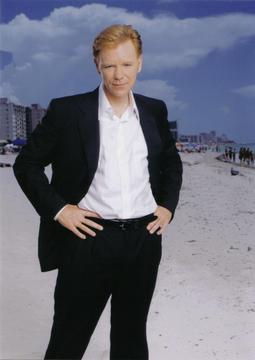
Thank goodness other countries are slightly more civilised. With redheaded David Caruso leading the team of CSI Miami, the Americans have shown us that redheaded men can be sexy, confident and capable.
We Brits might think we’re five hours ahead of Miami, but it actually looks like we’re several decades behind.
I always thought Britain’s media was acutely sensitive of racial issues, carefully crafting ethnically diverse casts and characters into soap operas and dramas. What I want to know is this: How long do we have to wait until redhead characters are penned with the same respect as any other minority group?
An Open Letter to the British Public
I have ginger hair. And for some reason, a lot of you have a problem with that.Maybe it’s because my ancestors; all those burly Vikings with horns on their helmets; spent the dark ages raping, kidnapping and torturing your ancestors.
But maybe you’re just like an awful lot of British people. The reason they’ve been picking on me is because they’re a bunch of miserable, bigoted bullies.
That was a dirty secret recently revealed on Celebrity Big Brother. Put a gang of Brits into a confined space and watch them single out the weakest for abuse. Oh, Jade Goody’s squeezing out crocodile tears now, but let’s be honest. She’s not sorry for what she did. She’s only sorry she got caught.
Yep, Britain’s a nation of bullies. Far from the tolerant, multicultural society we pretend to be, the United Kingdom is made up of a bunch of nasty little racists.
Fortunately, our interfering government has passed laws to protect certain people from this abuse. If you’re African or Asian, laws exist to prosecute those who pick on you. Like little children, we Brits can’t be trusted unless there are rules to govern our behaviour. On paper, we might claim to abhor prejudice; but as Jade and her cackling buddies revealed, we Brits are far more ashamed of being labelled racist than actually being racist.
So perhaps that’s why Brits love to pick on redheads so much.
Redheads don’t have any legal protection. That means the good old British yob can ostracise, marginalise and ridicule us as much as they like with no fear of repercussion. In fact, it’s even socially acceptable!
It must be, since picking on redheads is condoned by newspapers, television and radio. Have you ever heard a story about Chris Evans or Robin Cook without somebody describing them as ‘ginger?’ Or seen a redheaded character on British television who’s not portrayed as a geek, like Bradley from Eastenders, or an unattractive Mummy’s boy, like Martin from Game On?
Just check out the headlines. When Sun editor Rebekah Wade assaulted her husband, The Times described her as a ‘ginger ninja.’ When the BBC ran a supposedly serious story about redheads being the subject of abuse, they gave it the headline: “Carrot Tops See Red!”
And this is supposed to be socially acceptable?
It gets worse. Britain’s obsession with ostracising and marginalising redheads practically borders on eugenics. At woman’s website Handbag.com, one terrified pregnant lady was trying to work out how to avoid producing a ‘ginger’ baby, since her husband carried the dreaded ‘ginger’ gene.
And genetics is the crux of the issue. My red hair stems from my Scottish heritage. It’s a racial thing. So why the hell aren’t I protected by the same laws as people with brown or black skin?
Why does the UK think it’s okay to subject us redheads, who make up about 10% of the British population, to institutionalised abuse?
I think the answer’s simple. Britain is a nation that adores bullying. And if we’ve ruled out bullying people who are black, or Asian, or Jewish or Muslim… Well, we need somebody to direct our impotent rage against.
Sorry, fellow redheads. It looks like we’re taking one for the team…
Subscribe to:
Posts (Atom)